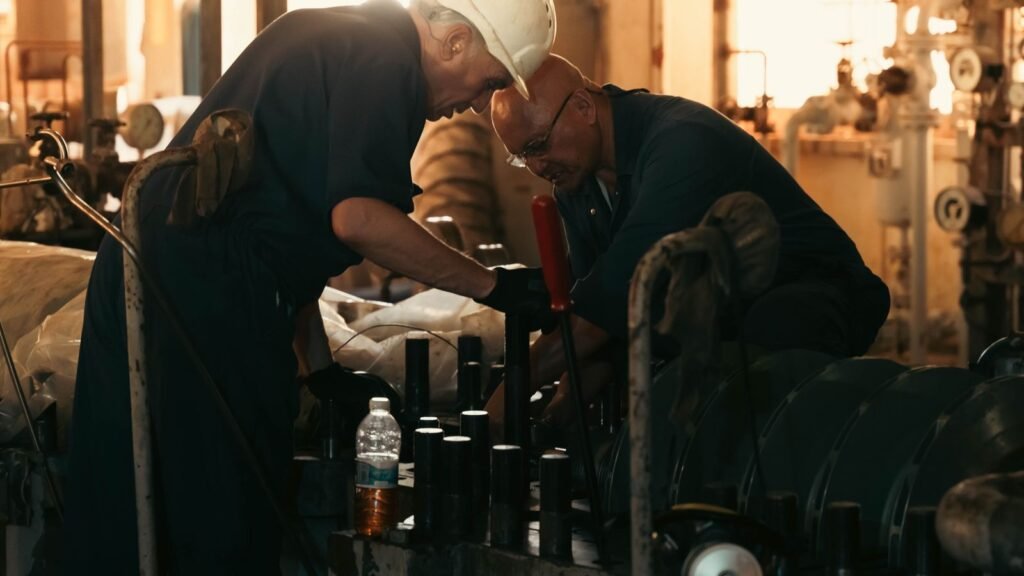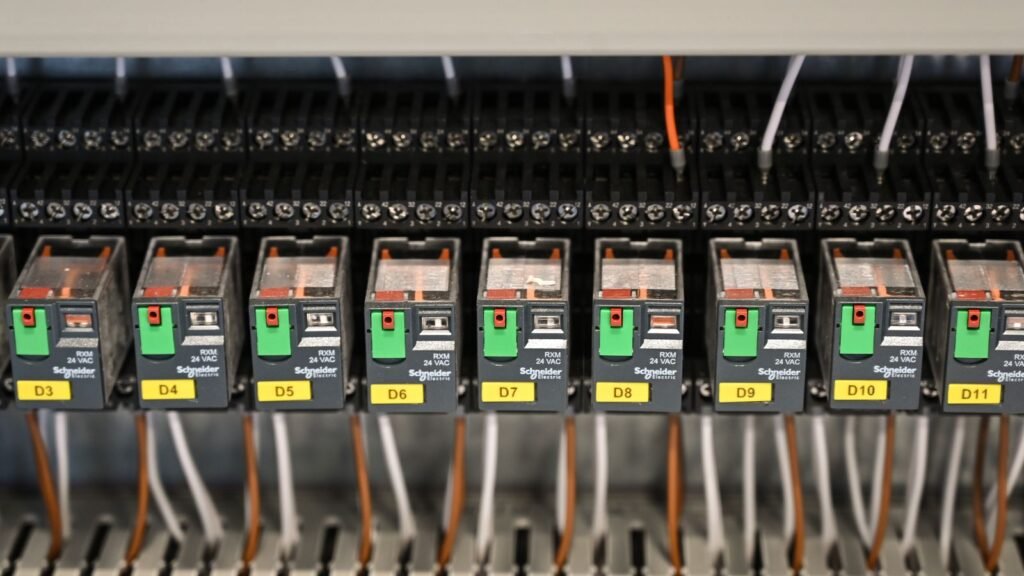

A motor can return from maintenance with sound bearings and a properly fitted coupling, yet its condition-monitoring trend suddenly looks worse. Before concluding that the repair failed, inspect the sensor installation and its cable. A strained lead, changed routing, damaged connector or altered attachment can produce intermittent data, lost communication or a measurement that is no longer comparable with the original baseline.
For a PyXis-based installation, separate mechanical measurement integrity, electrical connection integrity and data quality in the PLC or historian. A plausible-looking numerical value is not sufficient evidence that all three remain correct.
Why maintenance work changes the monitoring chain
During motor removal, bearing replacement, alignment or guard refitting, cables may be moved temporarily or trapped beneath a bracket. A lead that clears the coupling when the machine is stationary can contact a vibrating guard once running. Cleaning chemicals and oil can also affect an unsuitable connector seal or cable sheath. None of these observations proves that the sensor has failed: they define inspection points that should be checked before changing alarm thresholds.
Document the sensor’s actual mounting point, axis orientation, connector arrangement and original cable path. Compare the as-left installation with pre-maintenance photographs and drawings. If the mounting position or stiffness changed, recognise that the vibration transfer path may have changed too.
Inspect the cable and support points
With the equipment isolated and the site safety procedure applied, inspect cable entry, bend radius, connector engagement, gland sealing, clamps and any flexing section. Confirm that the cable cannot rub against a rotating component, hot casing or sharp metal edge. Where a machine vibrates or moves in service, arrange strain relief so the connector does not carry the cable’s mechanical load.
Check that replacement leads meet the installed device’s electrical and environmental requirements rather than assuming every similar-looking industrial connector is interchangeable. Do not guess pin assignments or cable lengths from photographs. Use the issued PyXis documentation and the installation-specific wiring drawing.
Do not confuse network dropouts with vibration faults
Where the sensor reports over Modbus RTU, examine the transaction history before interpreting gaps in the trend. A missing reading, invalid response or stale PLC tag is different from a real change in measured vibration. Preserve timestamps and communication-quality flags alongside engineering values. If the serial connection is intermittent, investigate the approved RS-485 topology, shielding, reference arrangement and termination without changing several variables at once.
In particular, never replace a timeout with the last valid value and then label it as a live machine condition. That can conceal both monitoring faults and genuine changes in equipment behaviour. Our Modbus RTU data-freshness guide explains how to preserve trustworthy status across the polling chain.
Revalidate the measurement after repair
- Identify the installation. Record sensor asset ID, PyXis hardware and firmware revisions, mounting location, axis and controlled register-map issue.
- Inspect while isolated. Check mounting security, cable strain relief, guards, routing, connector condition and field wiring against the approved drawing.
- Verify data integrity. Confirm that the sensor is communicating, values use the correct units and scaling, and the PLC distinguishes valid readings from timeouts.
- Measure at comparable duty. Collect new readings at known motor speed, load, temperature and process conditions. Do not compare start-up peaks with a historical steady-state baseline.
- Record discrepancies. Note any changed attachment, repaired cable, altered route or replaced device, and retain the before-and-after evidence.
- Release the handover. Obtain the responsible engineer’s acceptance of monitoring quality and the approved alarm logic before relying on the trend.
For interpreting measurements following mechanical work, consult our PyXis post-repair baseline verification guide. Sensor replacement or firmware revision changes also require verification against the delivered controlled register map; this article makes no claim about particular register addresses, internal diagnostics or automatic fault classification.
A useful maintenance sign-off
The acceptance record should contain photographs of the final installation, cable and connector identification, communication test evidence, sensor and firmware identity, operating conditions and a representative baseline. This gives the next maintenance team a reproducible reference rather than an unexplained change in a dashboard.
To review an industrial motor monitoring installation or its PLC/SCADA interface, contact Tachyonic Intelligence with the asset details, wiring diagram and example trend.
Technical basis and limitations: PyXis 222x Series controlled datasheet TTN-DS-2026-002, Rev 08; Modbus over Serial Line Specification and Implementation Guide V1.02. Follow the installed hardware drawing and released firmware-specific register map. No unverified register numbers, cable ratings, connector pin-outs or machine-protection certification are asserted.
Image credit and disclaimer: “Engineers working in industrial plant machinery” by abdo alshreef / Pexels, reused from TISB’s existing site-hosted media under the Pexels licence. An illustrative industrial maintenance image, not a verified PyXis installation or evidence of a particular fault.