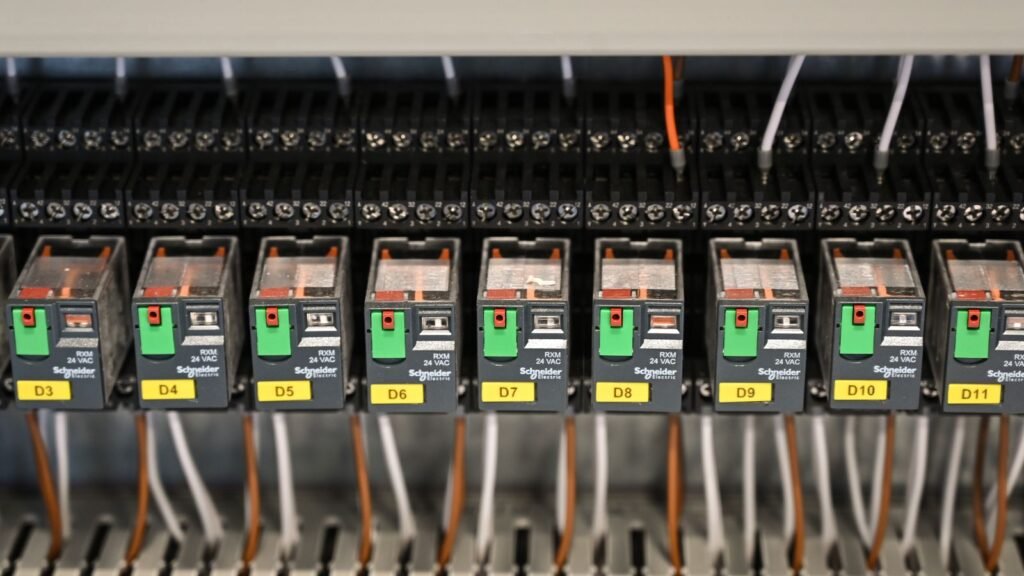

Some repetitive machine functions benefit from deterministic local sequencing near the field devices. Titania supports linear or pendulum sequence patterns, active-channel masks, step interval, pulse width, inter-sequence delay and one-cycle or repeat operation.
Suitable applications
Typical examples include valve banks, lubrication cycles, cleaning steps, sample handling, indicator testing and simple transfer sequences. The function is intended for approved local automation, not as a replacement for a certified safety controller.
Sequence engineering
- Define the required output order and active-channel mask.
- Set step interval and pulse width from the real actuator response.
- Use inter-sequence delay to allow pressure, motion or process stabilisation.
- Select one-cycle or repeat operation and document the start and reset conditions.
Load and protection review
Confirm solenoid current, inrush, duty cycle and inductive energy. Titania outputs include current limiting, thermal protection and active-clamp support, but the final design must remain within channel, system and ambient limits.
Supervision and fallback
Expose sequence status and output states to the host over Modbus. Configure power-up and communication-loss values deliberately. Test interrupted cycles, restart, reboot and restoration of communications before handover.
Technical basis: Titania Modbus DI-8 DO-8 datasheet TTN-DS-2026-001, issued 19 July 2026. Confirm the current hardware, firmware and controlled document revision before implementation.