
Titania device identity registers give a PLC, SCADA gateway or commissioning tool a direct way to confirm which remote-I/O module is actually responding on the RS-485 network. That check matters before an engineer trusts the I/O map, applies configuration or releases a replacement module into service.
The controlled Titania Rev 08 datasheet identifies a read-only identity and inventory group containing the device code, hardware and firmware revision, manufacturing date, serial number, I/O totals and DIP-switch value. Read together, those fields connect the physical module, its firmware-dependent behaviour and the project record.
Read identity before writing configuration
A successful Modbus response proves that a slave answered. It does not, by itself, prove that the intended Titania hardware and firmware are at that address. The first structured read should therefore establish identity before the commissioning sequence moves into communication settings, input filters, counters, output states or autonomous functions.
In the controlled datasheet summary, the identity and inventory data sit in the 30001–30038 reference group and are read through the Modbus input-register class. The detailed word layout, data type and any text or date representation must still come from the released register map that matches the installed firmware. An integrator should not infer packing or formatting from the descriptive field name alone.
What the Titania identity fields establish
| Identity field | Commissioning use | Mismatch response |
|---|---|---|
| Device code | Confirm the responding node is the expected product and variant | Stop configuration writes until the hardware is identified |
| Hardware revision | Match wiring, terminal and electrical documentation | Check the released drawing and change record |
| Firmware revision | Select the correct register map and supported feature set | Do not reuse decoding or settings from another release |
| Manufacturing date | Support traceability and service history | Reconcile the module with procurement and asset records |
| Serial number | Provide the unique link between the physical unit and commissioning record | Investigate an unplanned swap or addressing error |
| I/O totals | Confirm the expected input and output capacity reported by the module | Check product selection and map assumptions |
| DIP-switch value | Record the observed hardware selection alongside software settings | Resolve hardware-versus-register authority before restart testing |
The values should be captured as one identity record rather than checked individually and forgotten. A correct serial number with an unexpected firmware revision is still a commissioning exception. Likewise, the expected firmware on the wrong serialised module may indicate a replacement or addressing error that needs to be documented.
Build the identity check into the commissioning sequence
A practical Titania commissioning record should bind the network address to the physical module and the released documentation. The following sequence keeps that evidence together:
- Read the identity and inventory group using the firmware-matched register map.
- Compare the device code, hardware revision and reported I/O totals with the project bill of materials.
- Record the firmware revision before decoding feature-specific registers or writing configuration.
- Store the serial number and manufacturing date in the panel, PLC or asset record.
- Read and record the DIP-switch value before changing address, communication or operating-mode settings.
- Complete I/O, safe-state and autonomous-function tests, then retain the final configuration against the same identity record.
The Titania Modbus RTU commissioning guide covers address, baud, serial format and response-delay checks. Identity verification should sit ahead of those configuration steps, especially on a multi-drop trunk where more than one node can be present.
Control module replacement without copying hidden assumptions
Replacement work is where an identity block becomes especially useful. A new module may be physically compatible and respond at the expected address while carrying a different hardware or firmware revision. Copying the old settings without checking those differences can transfer assumptions that no longer match the installed release.
Before removing the original unit, preserve its identity, DIP value, network settings, I/O assignment, startup and communications-loss states, and any enabled logic, sequence, alarm or PWM configuration. After fitting the replacement, read its identity before restoring settings. Compare revisions against the applicable register map and release documentation, then repeat the relevant acceptance tests.
The Titania DIP-switch configuration guide explains how to record the hardware state and verify behaviour after restart. The serial number and revision fields make that record specific to one physical unit rather than a generic panel setting.
Expose identity to PLC, SCADA and maintenance records
For a single machine, identity can be captured in a commissioning sheet. For a larger installed base, the PLC or gateway can read the same fields during controlled startup or maintenance checks and compare them with an approved asset record.
A useful supervisory record includes the slave address, device code, hardware revision, firmware revision, serial number, reported I/O totals, DIP value and the date of verification. Changes should create a maintenance event rather than silently overwriting the previous record. That gives engineers a traceable explanation when register availability, configuration behaviour or diagnostic interpretation changes after service work.
Identity polling does not need to compete with normal process traffic. The cadence belongs in the network design: read during commissioning, after replacement, following a controlled firmware change or at a deliberately low maintenance interval. The production poll should remain focused on I/O and diagnostic data.
Keep revision control ahead of feature decoding
Titania’s controlled documentation separates identity data from coils, discrete inputs and writable holding-register configuration. That separation is valuable: the system can first establish the installed release, then select the correct interpretation for counters, filters, outputs and local functions.
Do not treat a descriptive register label as proof of units, data packing, enumerations or availability. The Rev 08 datasheet provides the product-level identity fields and reference group; detailed integration must use the register map and firmware release note that apply to the delivered module.
If you are preparing a Titania commissioning or replacement procedure, send the controller platform, node count, hardware and firmware revisions, register-map revision and required asset-record fields for an engineering review.
Technical basis: Titania 8DI/8DO Industrial Super I/O datasheet TTN-DS-2026-001, Rev 08, issued 22 July 2026. The detailed register layout and feature availability must be confirmed against the released firmware-specific register map.
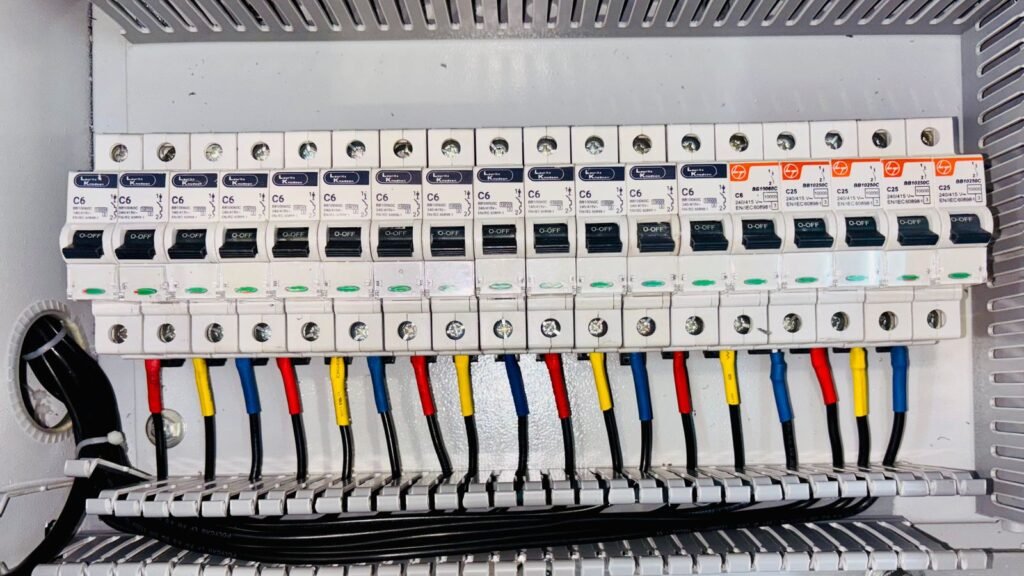
Image: Hoang NC via Pexels, used under the Pexels licence. The photograph illustrates industrial inspection and documentation; it does not depict the Titania product or imply endorsement.