
PyXis sensor mounting is part of the measurement chain, not a mechanical afterthought. A vibration sensor can be correctly powered, addressed and polled while still producing inconsistent trends if its mounting stiffness, location or axis orientation changes between readings.
The controlled PyXis 222x Series datasheet defines two mounting approaches: an M5 threaded stud and a high-force magnetic mounting option. Both have valid uses, but they serve different monitoring objectives. The decision should be made before the baseline is captured, then recorded with the sensor identity and machine configuration.
Choose the mounting method from the monitoring objective
The M5 stud is the preferred basis for permanent precision trending. When it is installed on a prepared rigid surface and tightened according to the released mechanical instructions, it provides the highest repeatability and bandwidth of the two documented options. The trade-off is that the machine needs a suitable threaded mounting point and the installation torque must be controlled.
A magnetic base is useful for temporary surveys, commissioning work or assets where drilling is not permitted. It speeds placement and removal, but the controlled source also identifies its engineering limitation: reduced high-frequency coupling and greater sensitivity to surface condition. That makes it less suitable for permanent precision trending.
| Decision point | M5 threaded stud | Magnetic base |
|---|---|---|
| Typical use | Permanent monitoring and repeatable long-term trends | Temporary surveys, commissioning or no-drill installations |
| Measurement coupling | Highest documented repeatability and bandwidth when correctly installed | Reduced high-frequency coupling relative to the stud method |
| Installation control | Prepared threaded point and controlled torque | Clean ferromagnetic surface and consistent placement |
| Main risk | Poor surface preparation or inconsistent installation | Surface variation, movement or a different location between readings |
The table is a selection guide, not a substitute for the released drawing and installation instructions for the ordered sensor variant. The Rev 08 datasheet does not publish a universal installation torque or magnetic pull-force value, so those values should not be inferred.
Mount close to the machine load path
Location can affect a trend as much as the attachment method. The controlled guidance places PyXis near the bearing housing or structural load path. A thin guard, flexible cover or lightly supported panel can introduce its own response and make the measurement less representative of the rotating assembly.
Prepare a clean, flat and rigid interface. Remove paint, rust and debris from the mounting area where the approved installation method requires direct contact. The objective is a stable mechanical path from the machine structure into the sensor, without a changing layer between them.
For repeat monitoring, retain the same location and mounting method. Moving a magnetic base to a nearby spot, changing from magnetic to stud mounting, or installing on a newly painted surface can alter the measured response even when the machine condition has not changed. Treat such a change as a new measurement configuration and document it before comparing trends.
Record X, Y and Z orientation before baseline capture
PyXis measures orthogonal X, Y and Z axes. Those axes only become useful plant information when they are related to the machine. Record which sensor direction represents radial, axial and vertical motion at the installed location.
That orientation belongs in the same asset record as the PyXis serial number, hardware and firmware revision, mounting method, location, machine profile, filter settings and baseline date. A replacement sensor or maintenance intervention can then be checked against the original installation rather than judged from memory.
The PyXis machine-profile configuration guide explains how speed, gear and bearing data provide analysis context. Mechanical orientation and configuration context should be released together; neither compensates for the other.
Control the cable so it does not disturb the measurement
Cable routing is also part of the mechanical installation. Provide strain relief and avoid rubbing points, unsupported loops and routes beside high-current switching conductors where practical. The cable should not pull the sensor, work the connector loose or transmit avoidable movement into the mounting point.
PyXis is available with an A-coded M12 connection or an integral-cable option. Connection selection affects serviceability and the number of sealing interfaces, while the mounting decision affects coupling and repeatability. The two choices should be reviewed together during layout. The PyXis M12 and integral-cable comparison covers the connector-side checks.
Commission the installed point before trusting the trend
A practical acceptance test should establish that the installation is repeatable, not merely that Modbus communication works.
- Confirm the sensor is on the intended rigid location near the bearing or load path.
- Record the M5 stud or magnetic mounting method and the installed orientation.
- Check cable strain relief, connector seating and separation from switching conductors.
- Read the device identity and match the hardware and firmware revision to the project record.
- Observe X, Y and Z response during a controlled machine condition and check it against the recorded orientation.
- Capture the healthy baseline across the operating states that matter to the asset.
- Repeat a measurement without changing the mounting arrangement and investigate unexplained differences before releasing alarms or prognostic use.
Filter settings should be chosen from the machine spectrum and the installed measurement path. The PyXis vibration-filter guide discusses high-pass and low-pass selection, but filtering cannot restore information lost through poor mechanical coupling.
Keep the mounting record with the condition data
For permanent monitoring, a prepared M5 stud installation provides the strongest basis for repeatable PyXis trends. A magnetic base remains valuable for temporary work when its coupling limits and placement sensitivity are understood. In either case, location, orientation, surface condition and cable restraint need to be controlled before a baseline becomes an engineering reference.
If you are selecting a mounting method for a motor, pump, fan, compressor, gearbox or conveyor, send the machine type, monitoring objective, proposed location, access constraints and required connection option for an engineering review.
Technical basis: PyXis 222x Series datasheet TTN-DS-2026-002, Rev 08, issued 22 July 2026. Final installation must use the released mechanical drawing and instructions that match the ordered sensor variant and firmware release.
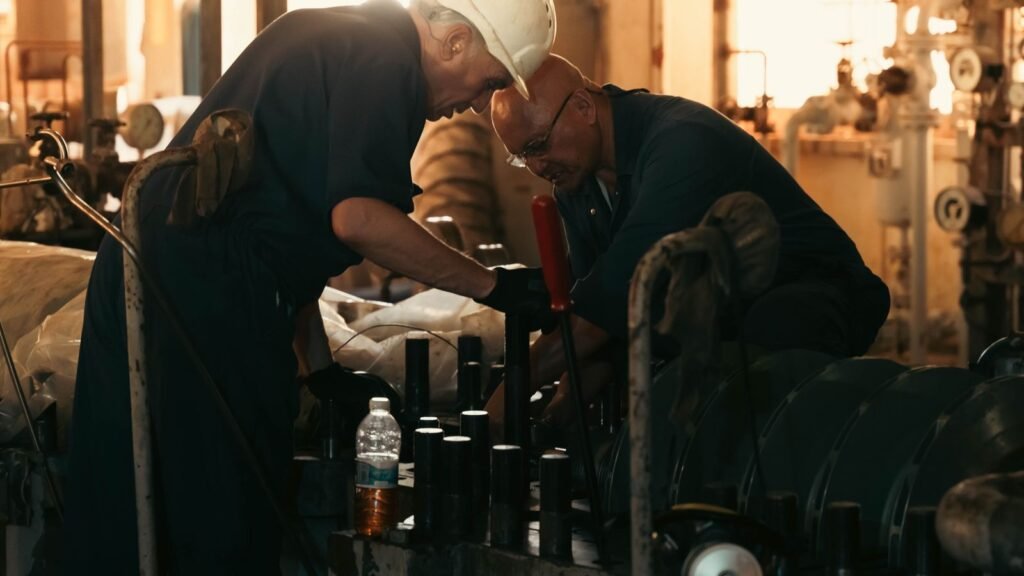
Image: abdo alshreef via Pexels, used under the Pexels licence.