
An industrial motor’s vibration rises during a demanding production shift. Its temperature rises too. The tempting diagnosis is a deteriorating bearing, but that is not yet evidence of a bearing fault. Speed, load, process resistance, ambient conditions and sensor placement can all change the measurements. Motor vibration and temperature trends become useful for maintenance when those operating conditions are recorded alongside the readings.
The engineering question is simple: has the machine changed at a comparable operating point, or has the operating point itself changed? This distinction matters when a PyXis monitoring point is integrated into a PLC, SCADA historian or maintenance dashboard.
Record the operating state first
Collect motor identity, production duty, commanded and measured speed, approximate load, operating mode and start/stop state. Where a drive or controller exposes current, power or relevant process variables, record these as independent context; do not label them as PyXis measurements. A pump at different flow conditions need not produce identical vibration, and a variable-speed fan should not be compared indiscriminately across speeds.
Define a repeatable window after start-up transients, with the machine settled in an agreed duty state. Keep sensor position, mounting rigidity and axis orientation consistent. If installation changes, document a comparability review rather than silently joining old and new trend points. The related post-repair baseline procedure explains why physical changes matter.
Temperature is not one universal measurement
Identify where each temperature originates. A sensor’s internal temperature is not automatically a bearing, winding or motor housing temperature; their thermal paths and time constants differ. The controlled PyXis 222x documentation distinguishes monitoring information by device and firmware profile. Any motor-temperature item must be confirmed against the supported profile and register definition rather than inferred from a similarly named tag.
Log the location, unit, scaling, timestamp and engineering meaning of every temperature tag. Record ambient conditions where relevant. Following a load change, thermal readings may continue to move after vibration has stabilised. Comparing instantaneous values without recognising that lag can produce misleading correlations.
Read patterns as investigations, not diagnoses
| Observed change at comparable duty | First engineering checks |
|---|---|
| Vibration rises; temperature remains stable | Confirm mounting, speed, load, process events and measurement quality before suspecting a specific mechanical fault. |
| Temperature rises; vibration stays stable | Check ambient conditions, ventilation, load, temperature location and thermal settling. |
| Both rise together | Check changed duty first; then examine lubrication, alignment, bearings and process conditions using corroborating evidence. |
| One value stops changing unexpectedly | Check communication quality, timestamps and stale PLC values before declaring stability. |
No pattern establishes a unique failure mechanism. A vibration spectrum, physical inspection, lubrication record, electrical measurement or speed trace may be needed before a diagnosis is defensible.
Keep data quality separate from condition severity
PyXis 222x monitoring includes vibration and condition information usable by supervisory systems, but available groups, scaling, enumerations and update behaviour can depend on installed firmware. Verify device identity against its issued register map. Do not copy an address, alarm state or decimal conversion from another installation just because the product family is identical.
Distinguish valid measurements, unavailable or stale data, and genuine condition changes. A retained last-good value must not count as a new sample. Store sample time and a quality flag; suspend condition conclusions when the measurement chain cannot be trusted. See the PyXis fault-state integration guide for decoding and quality handling.
Validate alarms on the real machine
Begin with a qualified normal range for each meaningful duty state. Decide what constitutes a warning, an investigation trigger or a separately engineered machine-protection function. Do not invent a universal threshold from one day’s readings. If the PLC or SCADA implements persistence, deadband or hysteresis, test that supervisory logic against the shortest genuine event that must be detected; never assume those facilities are native to every PyXis firmware.
Reproduce representative start-up, steady-operation, load-change, communication-loss and recovery conditions. Confirm alarm history identifies machine state, measurements, quality and intended operator response. Use a test load or safe operating window approved for the machinery.
Preserve a reproducible record
Archive sensor identity and orientation, mounting reference, firmware version, approved register-map revision, operating-state definitions, baseline conditions, trend examples, alarm rules and validation observations. A technician examining the trends later should know which readings are comparable and which require a new baseline.
For a monitoring integration review, contact Tachyonic Intelligence with the motor details, installed PyXis hardware and firmware, example trends and operating-state information.
Technical reference: PyXis 222x Series Datasheet TTN-DS-2026-002, controlled Rev 08 (site-hosted July 2026 issue). This article prescribes no firmware-dependent registers, temperature profile, alarm enumerations or certified protection function; use the issued firmware-specific map and actual application design.
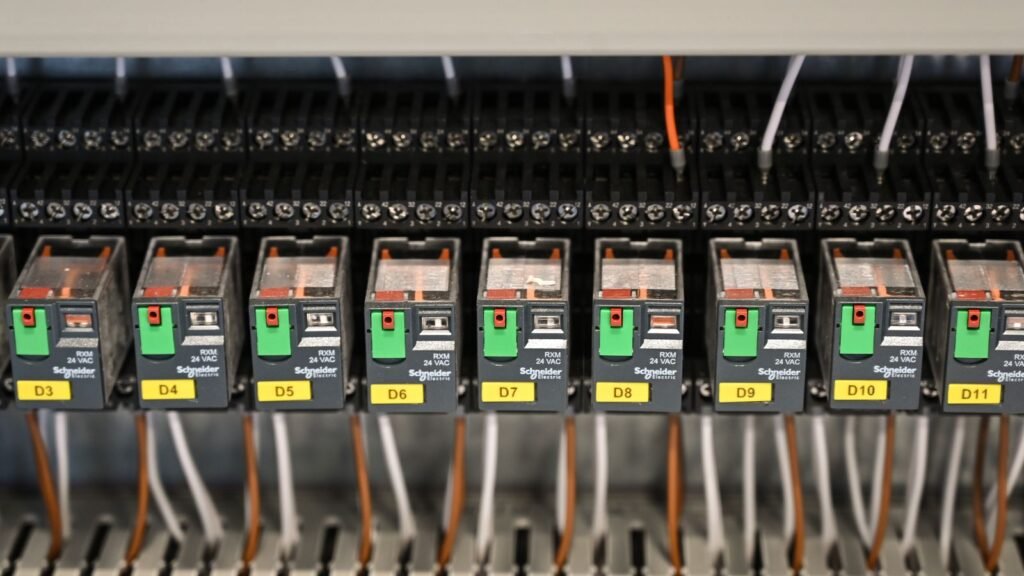
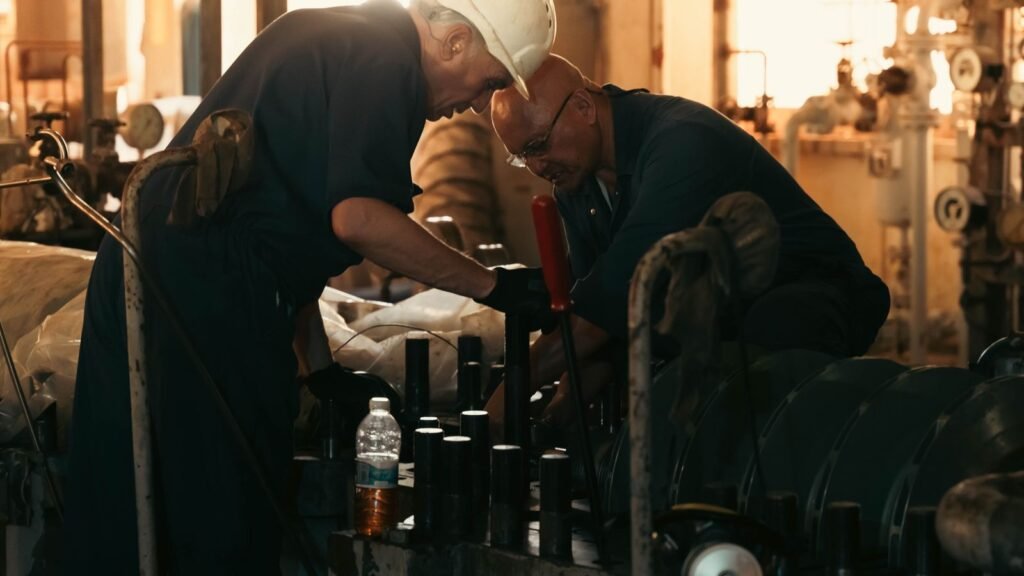
Image credit: “Industrial Worker Using Tablet in Factory” by Sergey Sergeev / Pexels, reused from TISB’s authorised media library under the Pexels licence. Generic illustrative scene; no depicted person or equipment is a PyXis installation, verified diagnosis or endorsement.