
The second edition of ISO 20816-3:2026 was published on 28 October 2026, replacing the 2022 edition. For maintenance engineers, the first task is not to import unfamiliar vibration limits into a PLC. It is to confirm the machines covered, how the original measurements were collected and whether previous monitoring data are genuinely comparable. An accurate sensor reading can still lead to a poor decision when its operating context is missing.
Check the machine’s eligibility before setting limits
ISO 20816-3:2026 addresses in-situ vibration assessment for specified industrial machines operating from 120 to 30,000 r/min. Its scope includes electric motors with flexible couplings, certain compressors, fans, conveyors and other coupled machinery. Where an electric motor is rigidly coupled to a machine governed by another part of ISO 20816, the applicable part needs separate consideration. The new edition also expands certain Group 3 coverage, including machines with rated power at or below 15 kW.
It addresses broadband vibration near shafts, bearings, pedestals and housings during steady running, for acceptance assessment and operational monitoring. It does not provide a complete bearing- or gear-fault diagnostic method. Severity evaluation, fault identification and safety protection are separate engineering decisions. Numerical criteria require the complete purchased standard and the correct machine and support classification.
Preserve the meaning of each measurement
Before comparing today’s value with an earlier baseline, verify measurement position, attachment, sensor axis, units, filtering, machine speed and operating state. A drive-end bearing housing and a different measuring point cannot simply share an alarm threshold. Similarly, an acceleration transient during a start cannot be compared with a stable full-load observation as though both represented the same duty condition.
On variable-speed machinery, group observations into meaningful speed and load bands. Record the speed reference or measured RPM, process duty where available, temperature state and whether the machine has settled into normal operation. Compare measurements from equivalent conditions and investigate unexplained changes at a fixed duty point. Blending dissimilar operating states into one average can conceal degradation or create false alarms.
Use PyXis within a traceable monitoring system
Tachyonic Intelligence’s PyXis industrial condition-monitoring platform supports vibration and temperature-based monitoring with integration into industrial control systems. The issued PyXis 222x Series controlled datasheet TTN-DS-2026-002, Rev 08 describes the manufacturer’s published device capabilities. Specific signal availability, register addresses, units, scaling, data types and firmware behaviour must be checked against the delivered product revision and its controlled register map; they must not be inferred from an editorial article.
At the PLC and historian, retain the reading timestamp, engineering quantity, sensor axis, asset identity, operating-state reference and communication-quality status. If the Modbus link fails, mark measurements stale rather than continuing to display the last good value as fresh machine-condition evidence. Keep diagnostic monitoring separate from independently engineered protective trips.
Six checks before changing a vibration alarm
- Scope: record motor and driven-equipment type, coupling, rated power, operating speed and applicable ISO standard part.
- Measurement: confirm location, mounting, axis, units, acquisition settings and whether the measurement is broadband or a different quantity.
- Baseline: collect representative healthy runs at defined speed, load and process duty; retain transients separately.
- Integration: confirm firmware identity, approved register-map issue, decoding, polling frequency, timestamps and stale-data handling.
- Response: test warning persistence, acknowledgement, investigation routing and maintenance work-order records without changing machinery safety functions.
- Change control: document the ISO edition, machine classification, authorised limits, approver, implementation date and rollback criterion.
What should change immediately?
An installation already collecting repeatable, duty-matched vibration data may first need a documented gap assessment rather than an immediate threshold change. Where historical trends mix starts, speed changes and stable operation, improve the monitoring context before reclassifying severity. Our motor start-up vibration guide provides a separate workflow for handling transient conditions.
The publication of ISO 20816-3:2026 does not certify a particular PyXis installation or establish universal PLC alarm settings. Before adopting revised limits, obtain the standard, classify the asset correctly and confirm the actual measurements and firmware mapping. To review a rotating-machine application, its sensor mounting and PLC/SCADA integration, contact Tachyonic Intelligence with the motor details, operating range and existing trend records.
Technical references and limitations: ISO 20816-3:2026, second edition (published 28 October 2026); Tachyonic PyXis 222x Series datasheet, Rev 08. These references establish the standard’s general scope and the product’s issued documentation; firmware-specific register behaviour, severity thresholds and certification must be independently verified for the installed equipment.
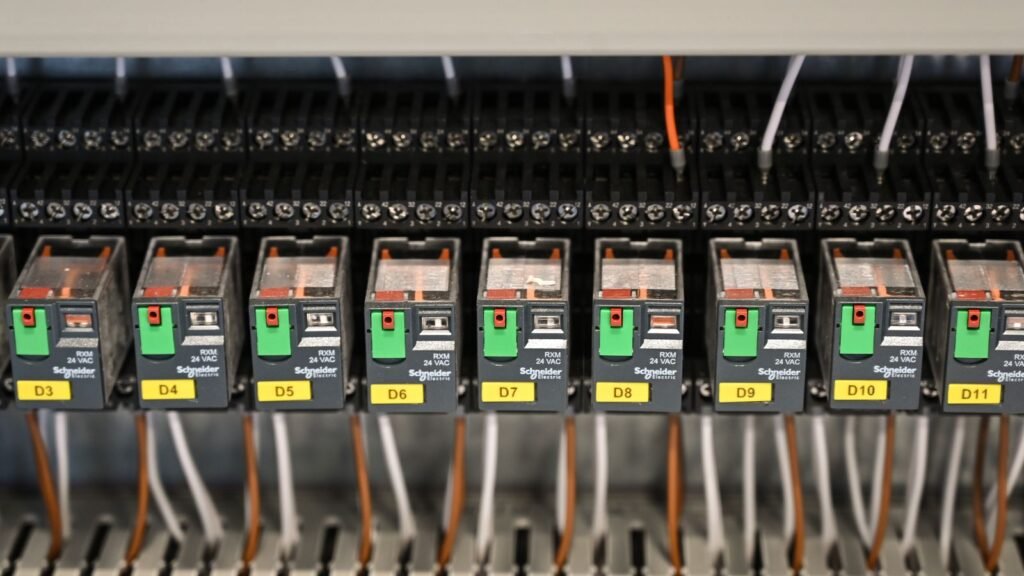
Image credit and disclaimer: “Engineers working in industrial plant machinery” by abdo alshreef / Pexels, reused from TISB’s existing image library under the Pexels licence. Illustrative industrial-maintenance photograph only; it does not depict a verified PyXis installation, a measured ISO 20816-3 test or endorsement by the people shown.