
A monitoring device can communicate successfully, display plausible numbers and still be unfit for operational handover. Wrong units, stale values, undocumented firmware or an unrepeatable machine state can turn apparently healthy trends into misleading maintenance decisions. For industrial motors and rotating equipment, a monitoring commissioning evidence pack should demonstrate that each measurement is traceable, its limitations are understood and the receiving team can repeat the checks.
Begin with the asset and the engineering purpose
Identify the machine tag, process duty, driven equipment, criticality and the decisions the data will support. Is the installation intended to trend vibration after maintenance, provide early condition alerts or collect diagnostic evidence for investigation? Avoid claiming that condition-monitoring information is a certified protection or emergency-stop function. Any protective action requires a separately engineered, risk-assessed and validated system.
Record the installed sensor model and variant, serial or device identity, physical location, measurement axis and mounting arrangement. Photograph the location and note the cable route, grounding arrangements and relevant installation constraints. The PyXis mounting guide explains why mounting consistency matters for repeatable comparison.
Capture the controlled technical baseline
Retain the issued product datasheet, approved installation instructions, installed firmware identification, matching Modbus register map and any applicable release note. Record document revisions rather than saving unlabelled PDFs. The PyXis 222x Series controlled datasheet is TTN-DS-2026-002, Rev 08, issued 22 July 2026. That document is an application reference, not a substitute for checking the actual hardware variant and firmware-specific register map.
For a Modbus RTU point, record slave address, baud rate, serial format and wiring arrangement as commissioned; test the configuration against the live unit. Verify the documented register address, data type, word ordering where applicable, scaling, engineering units and expected update behaviour. Do not copy a register table from an earlier firmware release merely because a value looks credible. The PyXis Modbus RTU commissioning guide provides supporting integration context.
Prove measurement quality rather than mere connectivity
Collect a small set of time-stamped readings at explicitly stated machine operating conditions. Include speed or relevant process load where available, observation duration, machine state, ambient or machine temperature if material, and any concurrent maintenance activity. Capture what was actually observed; do not invent a measurement repeatability tolerance or alarm threshold when the project has not defined one.
At the PLC, gateway or historian, confirm that an intentionally disconnected device is reported as unavailable rather than preserving its last good number as current. Inspect timestamps, timeout treatment, invalid-data flags and reconnection behaviour. Confirm the value is shown with the correct units and tag identity. For a variable-speed machine, compare values only within appropriate operating-state bands. A convincing dashboard screenshot is not evidence of data integrity unless its source and test condition are recorded.
Test alarm behaviour and ownership
For each proposed warning, define the underlying indicator, applicable operating state, engineering basis, responsible reviewer, operator instruction and reset behaviour. Verify how communication loss and bad quality are distinguished from genuine condition deterioration. Alarm delays, deadbands and persistence should be tested against the actual approved design rather than inferred from generic sensor specifications.
Record who may change setpoints and configuration, how changes are approved and where previous revisions are kept. Where trend baselines are created after repair, preserve pre-maintenance history instead of silently overwriting it. Our post-repair baseline procedure covers the separation of historical and new references.
Hand over evidence that another engineer can reproduce
The final pack should include an as-built point list, machine and sensor identifiers, wiring and mounting photographs, firmware and document revisions, register mapping, representative trends, quality/failure tests, alarm demonstration records, deviations and named acceptance sign-off. Log any unresolved issue with its owner and retest criterion. Store the pack where the operations and maintenance teams can retrieve it during troubleshooting, not only in the commissioning engineer’s laptop.
Treat acceptance as two decisions: first, the instrumentation and data path are technically sound; second, the chosen measurements and alarms are suitable for this machine’s maintenance objective. A pass on the first does not guarantee the second. This distinction prevents a reliable communications link being mistaken for a validated diagnosis.
For a review of your industrial monitoring commissioning evidence pack, contact Tachyonic Intelligence with the asset type, monitoring purpose, controller platform, installed device variant and firmware revision.
Technical reference: PyXis 222x Series Datasheet TTN-DS-2026-002, Rev 08 (22 July 2026). Exact register addresses, scaling, supported diagnostics and commissioning parameters must be confirmed against the installed firmware and its controlled map. This article is general engineering guidance, not a device-specific acceptance certificate.
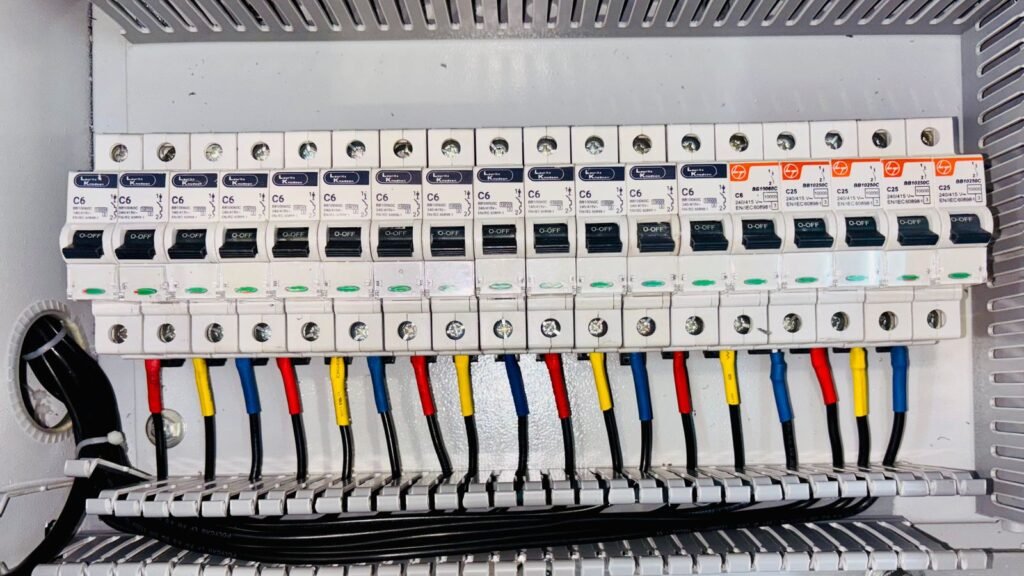
Image credit: Photograph by abdo alshreef on Pexels, under the Pexels licence. The image is illustrative and does not document this commissioning process or a Tachyonic product installation.