
A replacement remote-I/O module or vibration sensor may answer the same Modbus address as its predecessor, yet a PLC can interpret its data incorrectly. The cause may be a changed register definition, an altered default setting or simply a commissioning record that never captured the original firmware. Modbus firmware regression testing is the discipline of proving the entire application interface again whenever a device revision changes. A successful serial response is merely the beginning.
Record the installed release before changing anything
Freeze the machine’s current hardware identity, serial number, firmware revision, Modbus unit address, serial framing and configuration. Capture the exact approved register map and application version used to decode the device. For Titania 8DI/8DO remote I/O, include the input/output schedule, startup states, communications-loss policy and any enabled local logic. For PyXis monitoring points, include the sensor location, machine profile, scaling, alarm interpretation and a representative healthy trend.
Read back the fields available on the actual installed device rather than assuming that a label in a spreadsheet proves identity. The existing guides to Titania device identity and PyXis asset traceability explain how identity evidence fits into commissioning.
Compare register semantics, not only addresses
Before connecting a replacement or approving a firmware change, obtain the supplier’s controlled release documentation and the firmware-specific register map. Review the supported Modbus function codes, address convention, valid register spans, word order, signedness, scaling, units, configuration persistence and read-only or writable status. An address that still responds can carry a different meaning. A holding-register write that returns normally does not establish that the intended physical action has taken place.
Build an interface-difference sheet with four columns: PLC or SCADA tag, previous definition, proposed definition, and required test. Mark every changed field as either compatible by evidence, requiring a code change, or unresolved. If the map is missing, the affected mapping remains unapproved. Do not infer new register numbers from the product family or silently reuse values from another firmware issue.
Use a controlled bench or isolated plant test
Keep hazardous loads and machine motion under the site’s approved isolation and testing procedure. Record the old and new identities, then exercise the same validated read sequence using the actual PLC or gateway master. Check transaction success, expected data types, plausible values and diagnostic response to an unsupported request. The Modbus exception-code guide provides the distinction between an illegal function, an invalid address and a device-side failure.
For Titania, prove selected physical inputs through their PLC tags, test outputs with an authorised safe test load, and check startup, communication interruption and recovery. Confirm which controller or local function owns each output. For PyXis, compare qualified readings under representative speed and load; verify quality flags, scaling, alarm state and historical continuity before trusting a trend. If the monitoring point changes physical position, label it as a new measurement baseline rather than attributing a trend shift solely to firmware.
Preserve rollback and the evidence trail
Document the previous application build, configuration backup, permitted firmware or hardware recovery method, responsible approver and stop criteria. Do not promise downgrade capability unless the manufacturer explicitly supports it for that device and release. A rollback plan may instead require a retained, tested spare module. Separate technical rollback from physical reinstatement and authorise both.
An effective acceptance record contains the original and new device identities, controlled document revisions, register-map comparison, actual master requests, measured results, alarm and failure-state tests, discrepancies, corrective actions and sign-off. Repeat the test after the final approved restart so that volatile configuration does not masquerade as a persistent setting. When tests fail, restore the last verified safe state and investigate before reconnecting the live process.
Release the interface, not just the device
Maintenance teams need to know precisely which sensor, I/O module, PLC program and supervisory display were validated together. Store this compatibility record alongside the machine’s change-control file and mark untested tags or functions explicitly. A firmware revision is an engineering change whenever it can affect the way the plant measures, commands or alarms.
For a review of Titania or PyXis replacement acceptance, contact Tachyonic Intelligence with the installed device identity, firmware versions, controlled register maps, PLC tag list and intended failure-state behaviour.
Technical basis: Titania 8DI/8DO datasheet TTN-DS-2026-001, Rev 08; PyXis 222x datasheet TTN-DS-2026-002, Rev 08 (both site-hosted controlled records dated 22 July 2026); and the Modbus Organisation specifications. This procedure supplies no firmware-specific register addresses, compatibility guarantee or safety certification. Use the released device-specific register map and approved engineering drawings for the installed version.
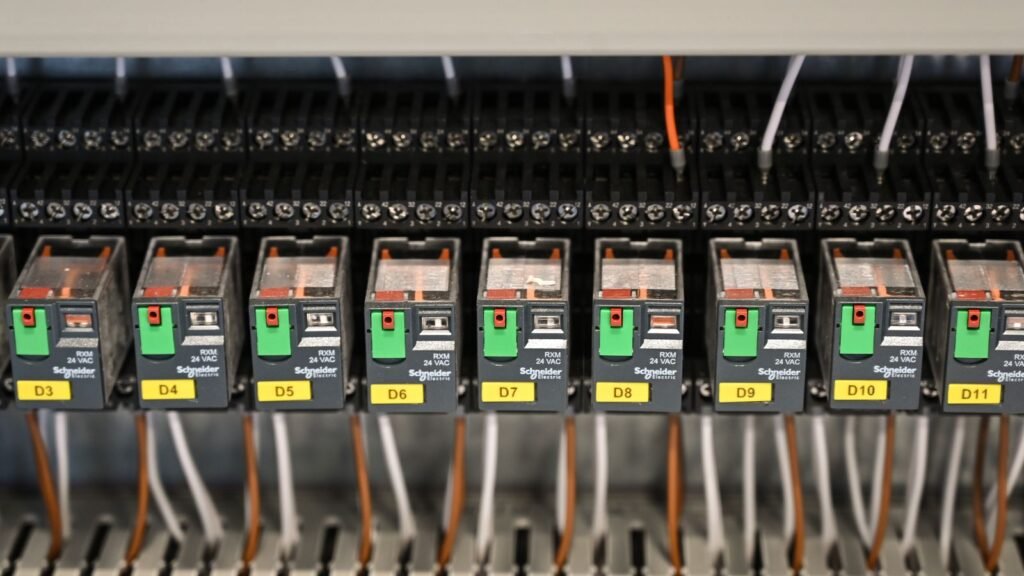
Image credit: Hoang NC / Pexels, “Factory Worker Reading the Manual”, reused from the site’s authorised media library under the Pexels licence. The image illustrates industrial documentation and inspection; it does not depict a Titania or PyXis firmware update, a verified installation or product endorsement.