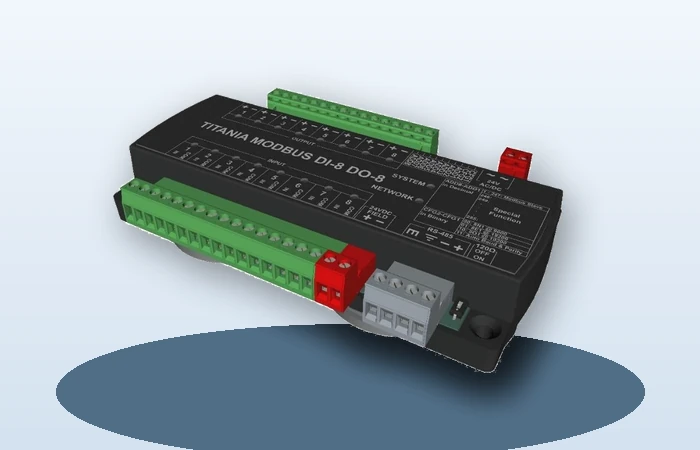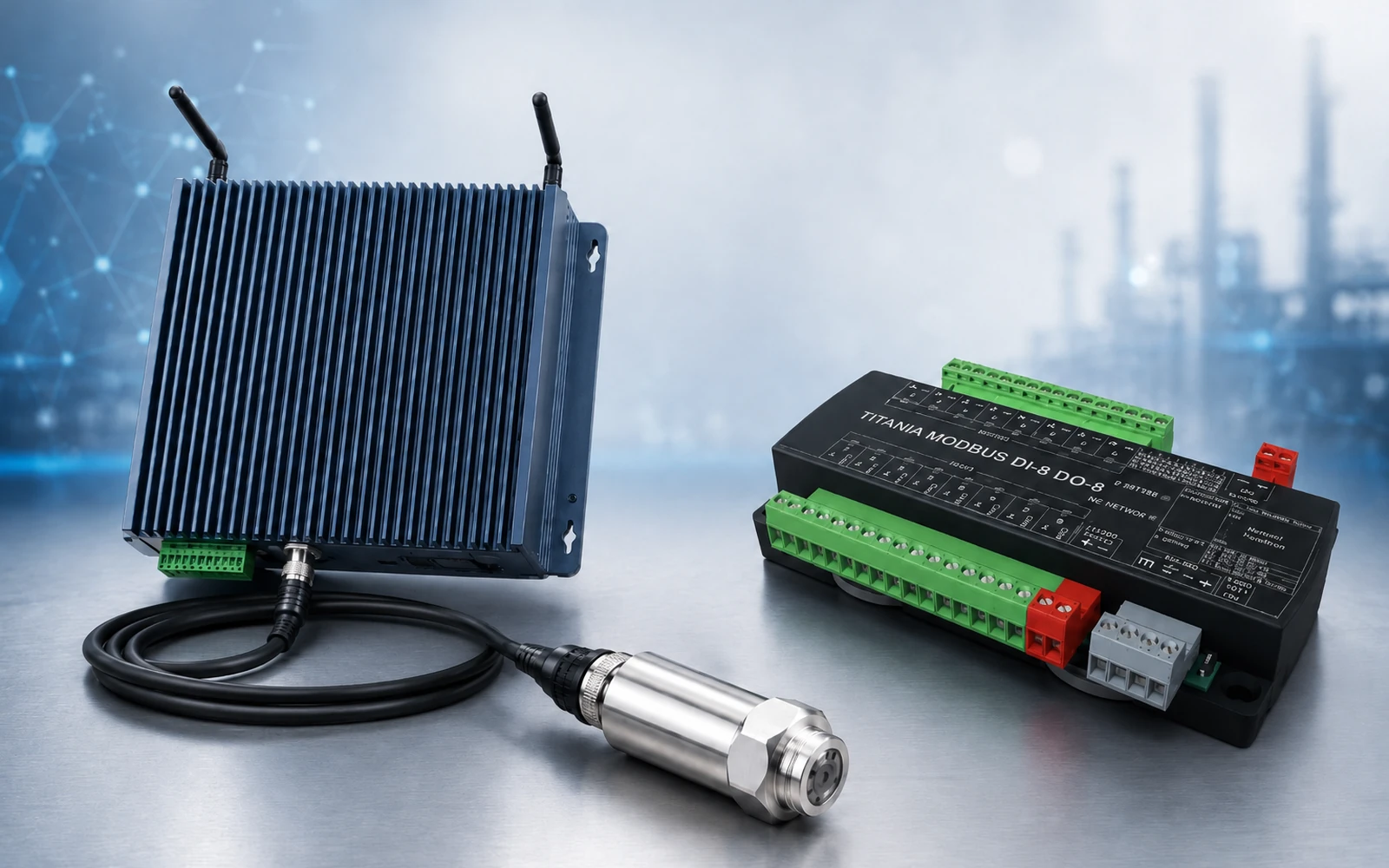

Conventional remote I/O depends on a PLC or network for every control decision. A Super I/O module extends that model by combining isolated field interfaces with local logic, timing, sequencing, annunciation and deterministic safe-state behaviour.
Keep essential behaviour close to the field
Local functions can respond without waiting for a network transaction. This is useful for interlocks, repetitive sequences, stack-light behaviour, communication-loss responses and simple proportional outputs.
Define the division of responsibility
The host PLC should remain responsible for coordinated machine and process control. Local I/O logic should be limited to clearly documented functions whose inputs, outputs, priorities and failure responses are understood by commissioning and maintenance personnel.
Applications
- Distributed cabinet and machine I/O expansion.
- Local valve or solenoid sequencing.
- Alarm annunciation using lamps and sirens.
- Counter and frequency acquisition from proximity sensors or encoders.
- Power-up and communication-loss output management.
Technical basis: Titania Modbus DI-8 DO-8 datasheet TTN-DS-2026-001, issued 19 July 2026. Confirm the current hardware, firmware and controlled document revision before implementation.