
CAN FD diagnostic projects often lose time before the first useful UDS request is sent. The usual causes are not a missing software feature; they are mismatched nominal and data-phase timing, uncertain bus topology, inappropriate active probing, incomplete transport-layer assumptions, or log files that cannot be reproduced by another engineer.
A fresh tool release makes that procurement problem timely. On 28 August 2026, BUSMUST released BUSMASTER 3.2.2.43 with vendor-described improvements to CAN/CAN FD configuration, passive and active bit-rate detection, UDS service workflows, log import and replay, and BUS-OFF recovery. The announcement is useful as a market signal, but this article is not an endorsement of a particular analyzer. The buyer lesson is broader: “supports CAN FD and UDS” is only the start of a test-system specification.
This guide is for automotive and equipment OEMs, ECU developers, test engineers, system integrators, production teams and technical procurement staff planning a CAN FD diagnostic bench, gateway, embedded controller or service workflow.
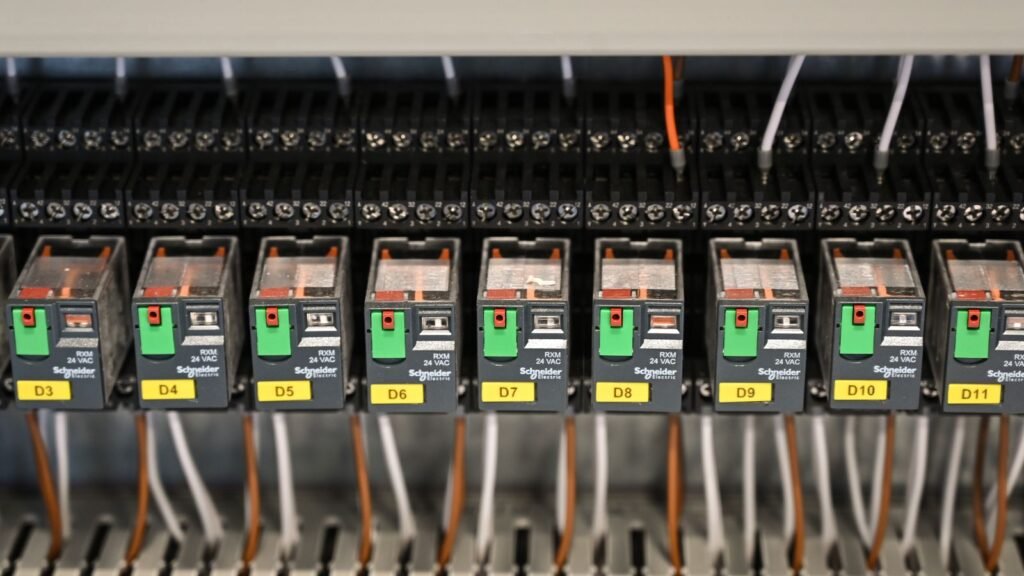
Hero image: Axel Richter on Unsplash.
Buyer’s brief
At a glance: four things to validate
8-second visual overview of the diagnostic workflow described in this guide.
Planning a CAN FD diagnostic or gateway project? Define the network, target ECUs, bit rates, UDS services, channel count, host interface and validation objective before selecting hardware. Tachyonic Intelligence does not sell CAN products; for CAN/CAN FD interfaces, analyzers and related products, visit CANS.
CAN FD support is not a complete diagnostic specification
CAN FD extends Classical CAN with a data phase that can use a higher bit rate and a payload of up to 64 bytes. Bosch and CAN in Automation describe two timing domains within a CAN FD frame: the nominal or arbitration phase and the optional faster data phase. That flexibility improves throughput, but it also creates more configuration and validation decisions.
| Buyer question | Why it matters | Evidence to request |
|---|---|---|
| Which nominal and data bit rates are required? | The network must use compatible bit timing, sample points and physical-layer margins. | A controlled timing profile for each network variant. |
| Will the tool listen passively or transmit while identifying the bus? | Active probing can disturb an operating network or trigger ECU behaviour. | A documented connection and discovery procedure. |
| Which UDS services and transport assumptions are in scope? | A UDS button does not validate addressing, sessions, timing, security access or download behaviour. | A service matrix with expected requests, responses and negative-response handling. |
| Are logs for evidence, analysis or real-bus replay? | Timestamp resolution, ordering, channel identity and file compatibility affect reproducibility. | Sample logs and a verified replay procedure. |
| What happens after BUS-OFF, reset or cable interruption? | Recovery behaviour can change test results and production outcomes. | Fault-injection and recovery test cases. |
Five checks before choosing a CAN FD analyzer or development platform
1. Separate nominal timing from data-phase timing
A single “500 kbit/s” field is not enough when CAN FD bit-rate switching is used. Define the nominal bit rate, data bit rate, sample points, synchronization jump widths, clock tolerance and whether transmitter delay compensation is required. The acceptable data-phase rate depends on transceiver characteristics, wiring, network length, topology and signal integrity—not only the analyzer’s maximum advertised rate.
CAN in Automation’s CiA 601 guidance emphasizes system design, topology, propagation delay, phase margin and bit-timing evaluation. Procurement should therefore ask for the actual supported timing combinations and a method to export, review and version-control those settings.
2. Treat passive listening and active probing as different operating modes
Passive detection can observe an already active bus without intentionally transmitting frames. It is the safer first step on a live vehicle or machine network, although it still requires correct electrical connection and does not identify every silent-node configuration.
Active probing may help when a standalone ECU does not transmit until it receives a valid request. It also introduces risk: the tester is now placing candidate frames on the network. Use it only with an approved test plan, an isolated bench where appropriate, current limiting, correct termination and a clear understanding of what the ECU may do when addressed.
3. Define UDS as a workflow, not a menu
ISO 14229-3 specifies an application profile for implementing Unified Diagnostic Services on CAN. A practical project still has to define addressing, transport, diagnostic sessions, timing parameters, supported data identifiers, security access, routines, fault memory, programming or download steps, negative responses and recovery behaviour.
For development and production, build a controlled service matrix. Each entry should state the precondition, request, expected positive response, allowed negative responses, timeout, security state and pass/fail evidence. This is more useful than a long list of clickable UDS services.
4. Validate logging and replay with representative traffic
The BUSMASTER release highlights ASC, BLF and LOG workflows. File-format support can make handover easier, but buyers should test more than file extension compatibility. Check timestamp precision, channel mapping, CAN FD flags, error frames, large-file behaviour, imported metadata and replay timing.
A repeatable acceptance test is simple: record representative traffic, close the project, reopen the file on another workstation, filter the same event, export it, and replay an approved subset on an isolated bench. Confirm that another engineer can reproduce the result from controlled instructions.
5. Test failure and recovery states explicitly
Bench systems should be assessed during cable interruption, wrong termination, power cycling, ECU reset, interface disconnection, BUS-OFF and host-application restart. Record whether the analyzer reconnects automatically, whether frames are lost or duplicated, how timestamps behave across recovery and whether the test sequence resumes safely.
For any system that can send commands to actuators or production equipment, define the boundary between diagnostics and deterministic control. A diagnostic application should not become an undocumented control path.
A practical CAN FD diagnostic acceptance checklist
- Network definition: Classical CAN, CAN FD or mixed environment; nominal and data bit rates; identifiers; termination and topology.
- ECU scope: target modules, power modes, wake-up behaviour and safe bench conditions.
- Diagnostics: required UDS services, addressing, transport, sessions, timing, security and negative responses.
- Interfaces: number of CAN/CAN FD channels, LIN or other buses, USB/Ethernet, GPIO and synchronization requirements.
- Evidence: logging formats, timestamp needs, export, replay, test-report and version-control requirements.
- Fault handling: BUS-OFF, reset, communications loss, application restart and operator recovery.
- Deployment: development bench, hardware-in-the-loop, production test, field service or embedded gateway.
Send this checklist to your CAN product supplier or integration partner. It provides enough context to identify missing interfaces, protocol assumptions and validation work before a quotation is prepared.
Where to source CAN and CAN FD products in Malaysia
Tachyonic Intelligence does not sell CAN, CAN FD or vehicle-network diagnostic products. Buyers seeking interfaces, analyzers and related hardware should visit Controller Area Network Solutions (M) Sdn Bhd (CANS) at cans.com.my.
CANS lists product categories including Ixxat CAN interfaces and Warwick X-Analyser. Confirm protocol support, channel count, host interface, timing, software compatibility and availability directly with CANS before purchase.
This separation matters: the article provides an engineering buyer checklist; CANS is the appropriate product-sales destination for CAN-related hardware.
Make the diagnostic workflow reproducible
The 28 August release shows where CAN FD tools are evolving: faster setup, safer discovery choices, more accessible UDS workflows, interoperable logs and stronger recovery. Those features matter only when they are tied to a controlled engineering process.
Before purchasing hardware or commissioning custom development, document the bus, target ECU, diagnostic objective, evidence required and failure states. The result should be a workflow another engineer can repeat—not a demonstration that works only on one laptop.
When contacting CANS, include your company and industry, vehicle or machine, target ECU or gateway, nominal and data bit rates, required UDS services, channel count, host interface, logging requirement, quantity, installation location and target date. These details help the supplier recommend an appropriate CAN product and quotation path.
Sources and fact-check notes
View sources and fact-check references
- BUSMUST — BUSMASTER 3.2.2.43 release — published and released 28 August 2026; first-party source for the vendor-described software, SDK and firmware changes.
- CAN in Automation — CiA 601 CAN FD guidelines — checked 29 August 2026; source for system-design and bit-timing considerations.
- Bosch — CAN FD protocol overview — checked 29 August 2026; primary technical source for CAN FD payload and bit-rate switching.
- ISO 14229-3:2022 — UDS on CAN implementation — published March 2022; official standards catalogue source.
- CANS Malaysia — online shop — checked 29 August 2026; product-sales destination for CAN-related hardware.
- CANS Malaysia — Ixxat CAN interfaces — checked 29 August 2026.
- CANS Malaysia — Warwick X-Analyser — checked 29 August 2026.
Fact-check note: BUSMASTER capability and stability statements are attributed to BUSMUST and are not presented as independent test results. Tachyonic Intelligence does not sell CAN or CAN FD products. CAN product references and availability must be confirmed directly with CANS; neither affiliation nor endorsement is implied. No compliance, functional-safety status, cybersecurity certification, performance, savings, availability or project outcome is claimed. Final suitability depends on the actual network, ECU, electrical interface, software, validation plan and applicable standards.