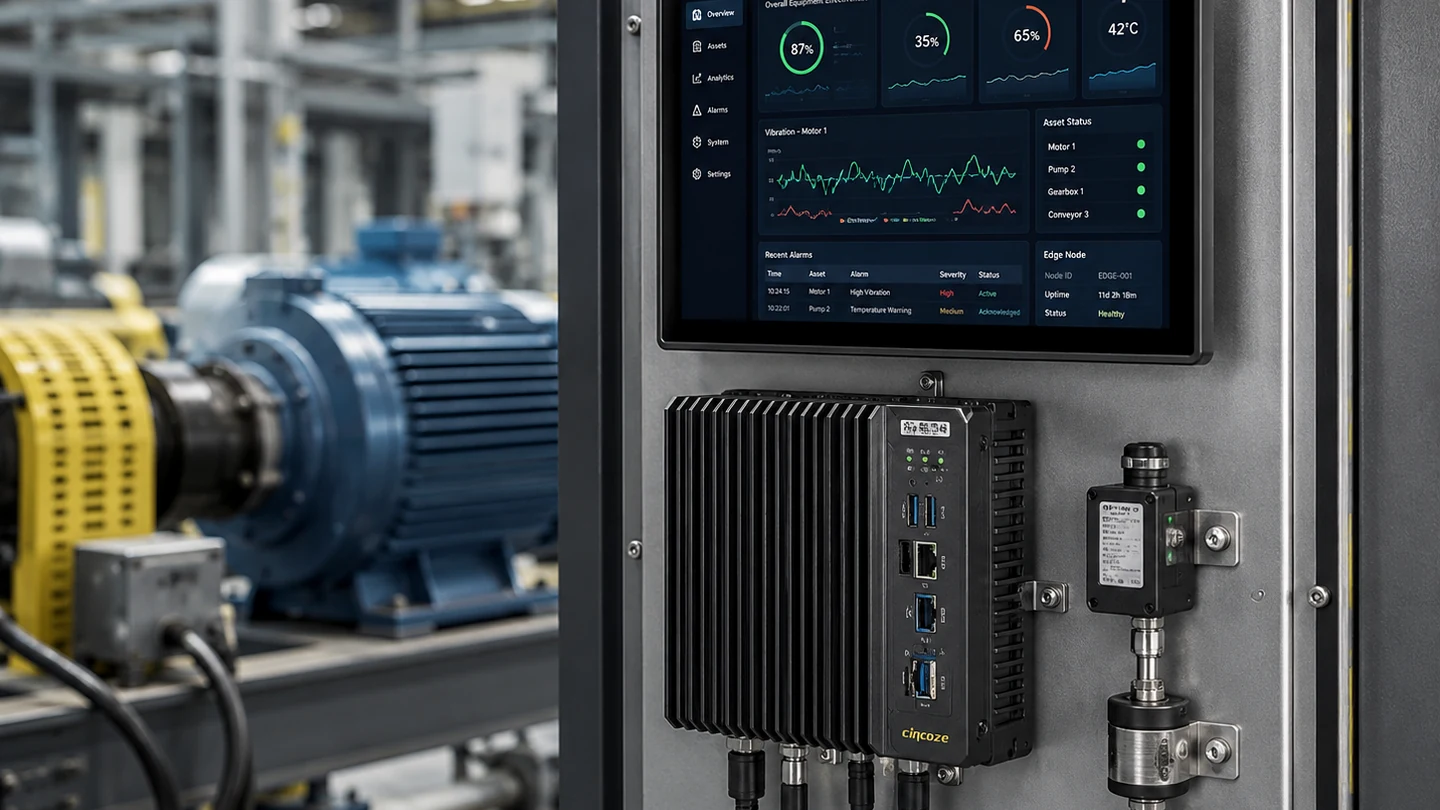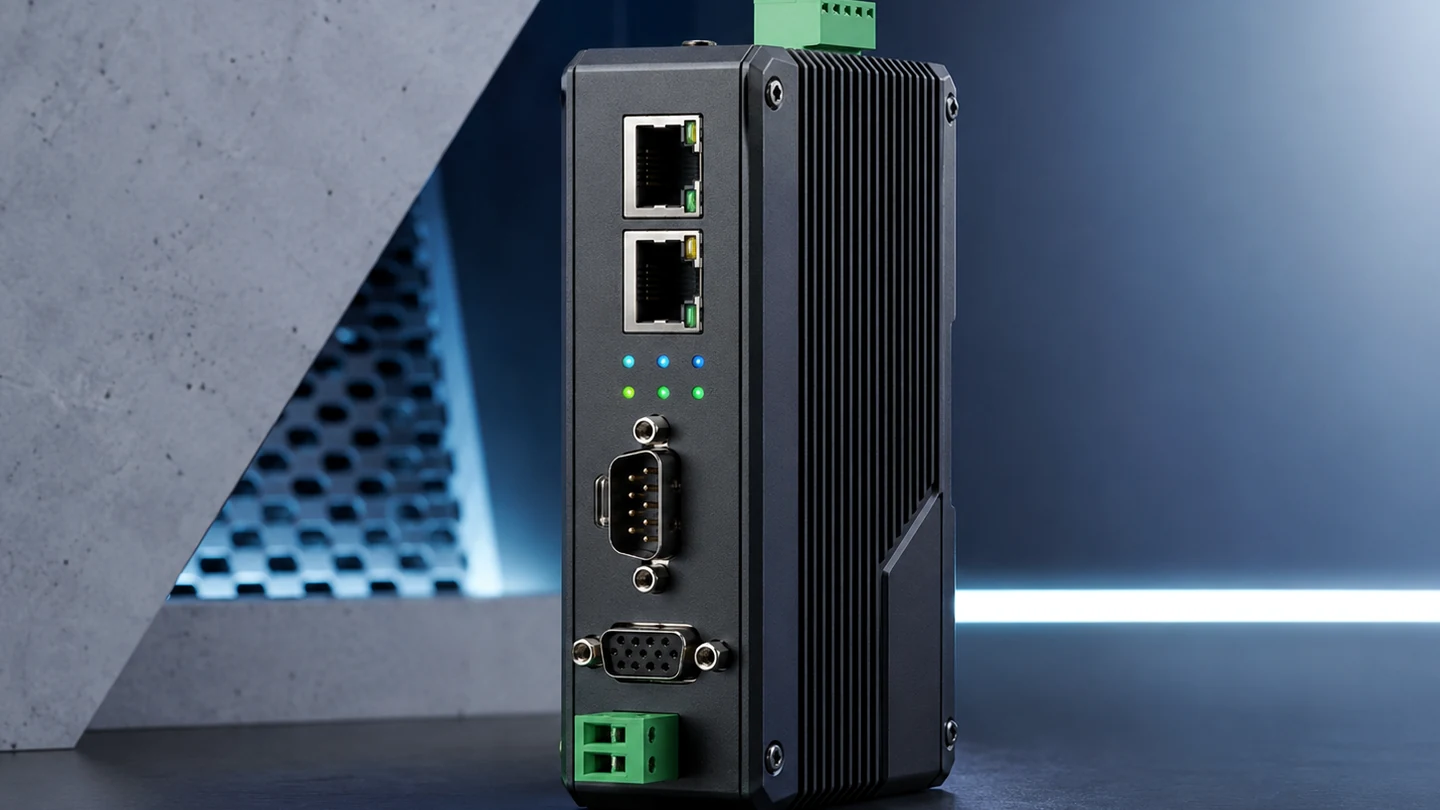

Adding signals to a central PLC cabinet can require long cable runs, interface relays and significant installation downtime. A distributed Titania node places eight isolated inputs and eight protected outputs closer to the machine and exchanges data over a two-wire RS-485 trunk.
Architecture benefit
Local termination can reduce the number of long individual field cores, improve channel identification and simplify later expansion. Device identity, input states, counts, frequency, output commands and output faults remain visible to the supervisory controller.
Panel and field design
- Provide a suitable 24 VDC supply and protection.
- Maintain separation between field power, outputs and RS-485 where practical.
- Use a daisy-chain trunk with correct termination and avoid star wiring.
- Confirm enclosure temperature and output-load heat dissipation.
- Label every channel and retain an as-built I/O schedule.
Isolation and EMC
Titania separates field I/O, internal logic, communications and power domains. The final system still depends on enclosure bonding, cable routing, surge protection, shielding and earthing. Validate the completed installation against the applicable site and product requirements.
Lifecycle value
Distributed I/O can shorten fault-finding because local LEDs and Modbus diagnostics show the state at the machine. Standard node configuration and spare strategy further reduce replacement time.
Technical basis: Titania Modbus DI-8 DO-8 datasheet TTN-DS-2026-001, issued 19 July 2026. Confirm the current hardware, firmware and controlled document revision before implementation.