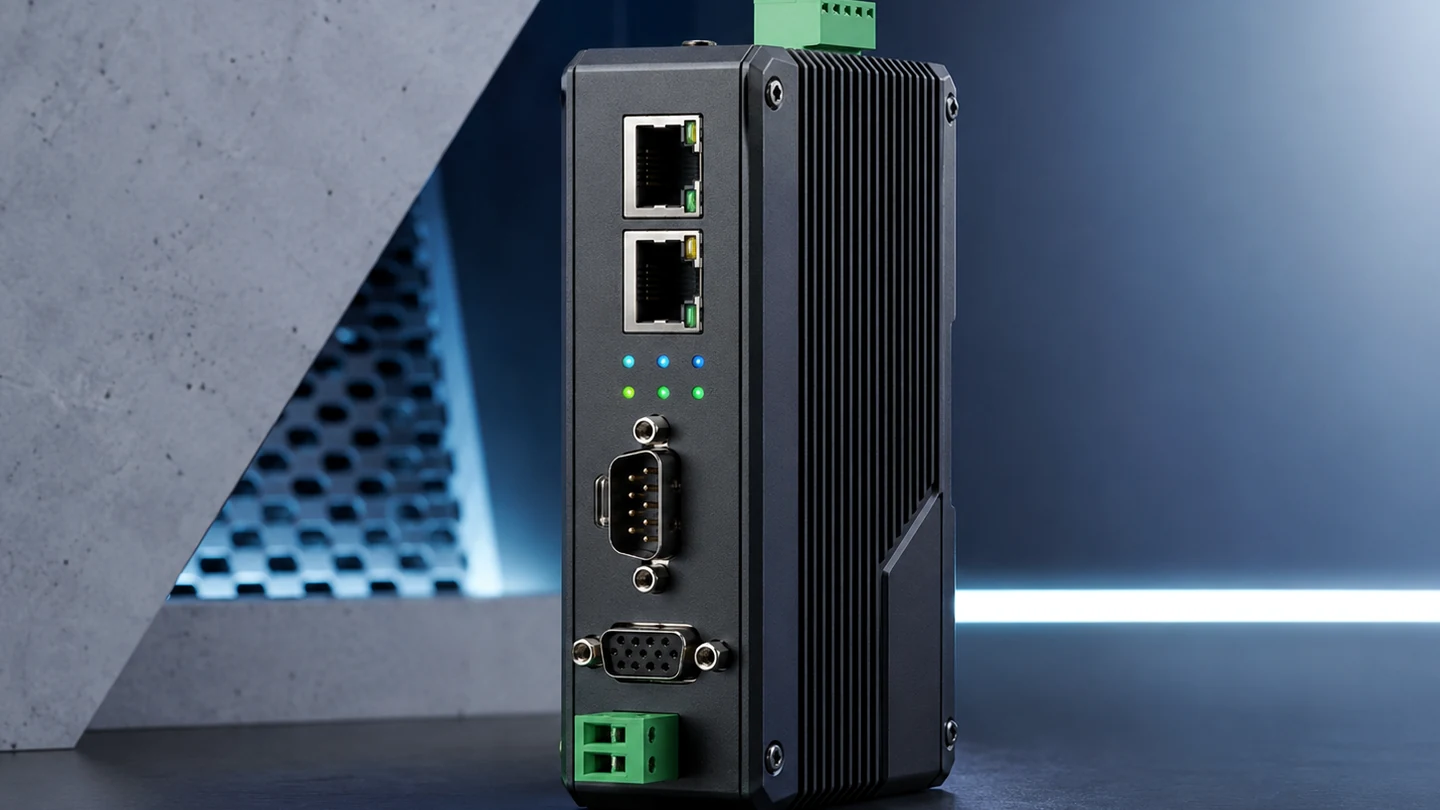

Brownfield machinery often contains a mixture of potential-free contacts, PNP sensors and NPN sensors. Titania supports these input types within one isolated digital-input platform, allowing a structured retrofit without forcing every field device to be replaced.
Survey the existing circuit
- Identify sensor supply voltage, output type and common reference.
- Check whether the existing control expects sinking or sourcing behaviour.
- Record cable cores, shield, terminal numbers and current field faults.
- Verify that the documented Titania input levels suit the actual devices.
Configure the correct interface
For a PNP sensor, configure a sinking input arrangement and reference DI.COM appropriately. For an NPN sensor, configure a sourcing input arrangement. Dry contacts connect between DIx and DI.COM according to the selected field-power scheme. Confirm the production terminal label and installation manual before energisation.
Filtering and diagnostics
Apply a filter time suited to the sensor and process. Use the channel LEDs and Modbus input state to validate field behaviour. Where a signal is used for counting, test at the maximum expected rate and under realistic electrical noise conditions.
Migration benefit
A documented mixed-sensor retrofit can reduce interface relays, simplify troubleshooting and provide standard Modbus visibility while preserving serviceable field devices. The final design must still satisfy isolation, protection and machine-safety requirements.
Technical basis: Titania Modbus DI-8 DO-8 datasheet TTN-DS-2026-001, issued 19 July 2026. Confirm the current hardware, firmware and controlled document revision before implementation.