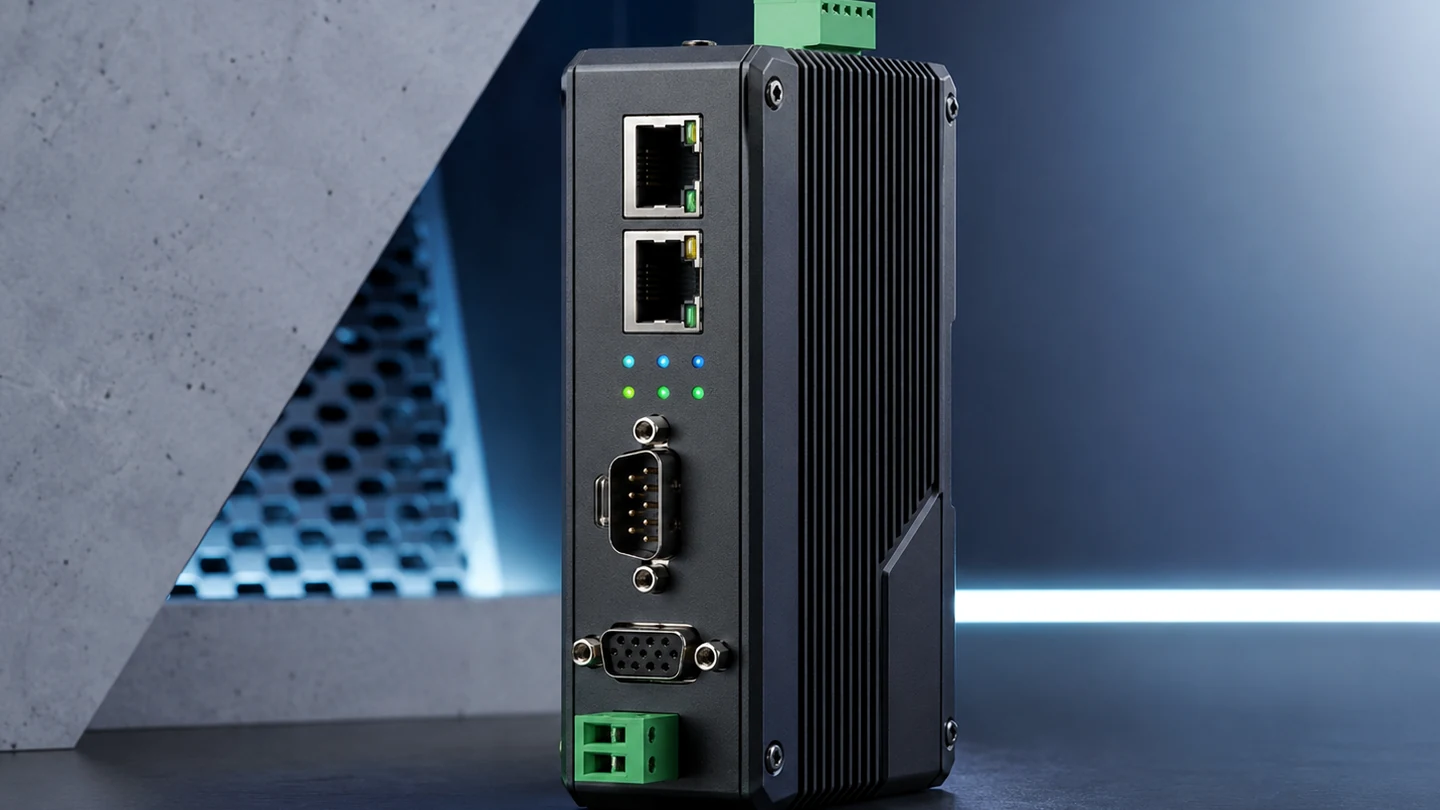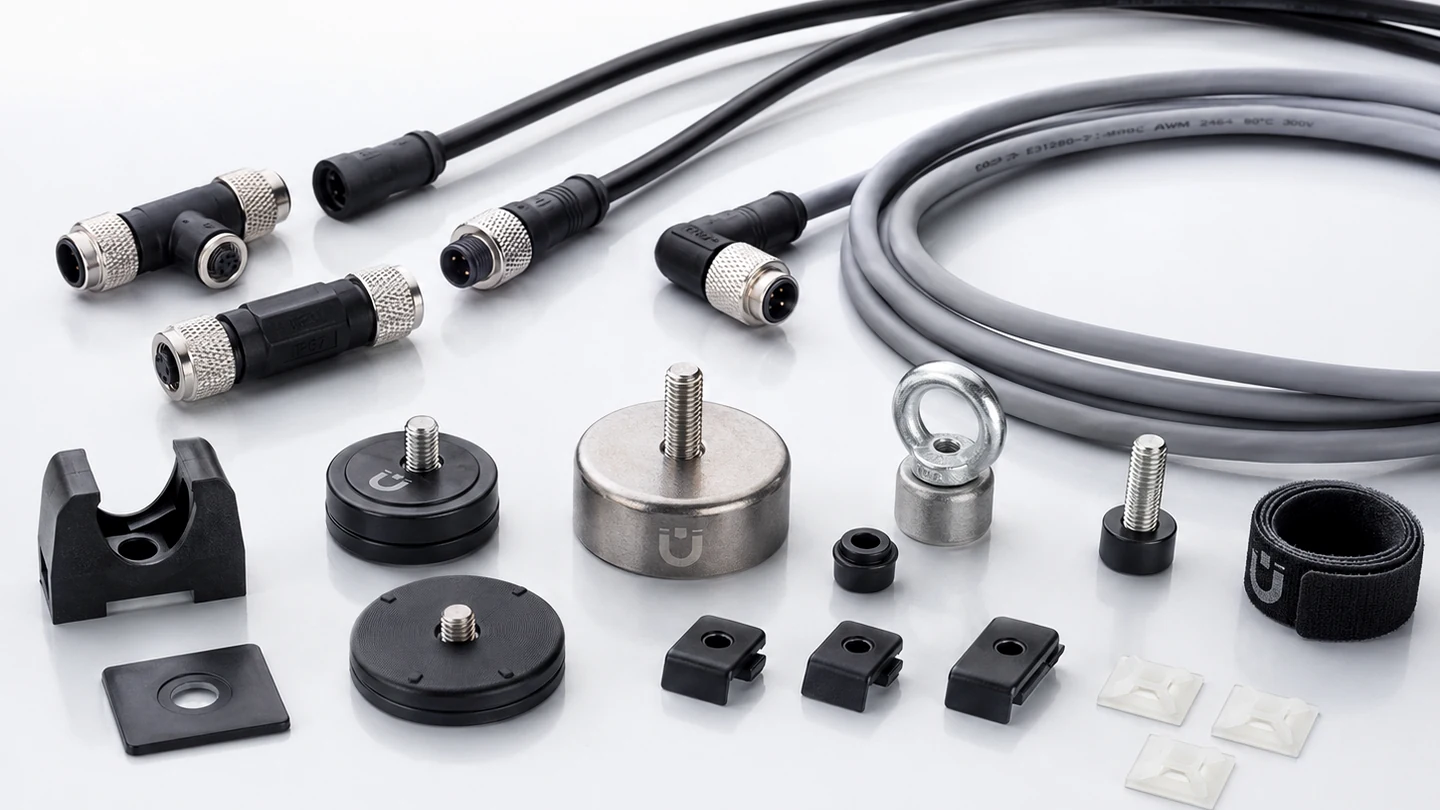

PyXis and Titania address different layers of a machine-monitoring system. PyXis supplies triaxial vibration, temperature, condition and prognostic information. Titania acquires discrete states and pulses and can operate selected outputs or local logic. A PLC, IPC or gateway coordinates both over Modbus RTU.
Field layer
Install PyXis on the bearing or transmission location that best represents the monitored asset. Connect proximity sensors, limit switches, tachometer pulses, alarms and local actuators to Titania where suitable.
Control and data layer
Use unique addresses and a controlled RS-485 trunk. The host reads vibration severity, harmonic and prognostic values from PyXis and digital states, counts, frequencies, output status and faults from Titania. Local safe-state or annunciation functions can continue independently where approved.
Supervisory and maintenance layer
- Display current condition and alarms in PLC/HMI or SCADA.
- Store trends in a historian or analytics platform.
- Create inspection or maintenance actions in the CMMS.
- Retain device identity, firmware, register map, mounting and commissioning records.
Design discipline
Define update rates, data quality, alarm ownership, communication-loss behaviour and cybersecurity boundaries before implementation. The architecture should remain understandable to operations and maintenance teams, not only the original integrator.
Technical basis: PyXis Smart 3-Axis Vibration Sensor TTN-DS-2026-002 and Titania Modbus DI-8 DO-8 TTN-DS-2026-001, both issued 19 July 2026. Confirm the current hardware, firmware and controlled document revision before implementation.