
A repeatable commissioning method is essential for comparable vibration data. The work should connect mechanical installation, communication setup, machine configuration and maintenance acceptance rather than treating the sensor as a simple network device.
1. Install
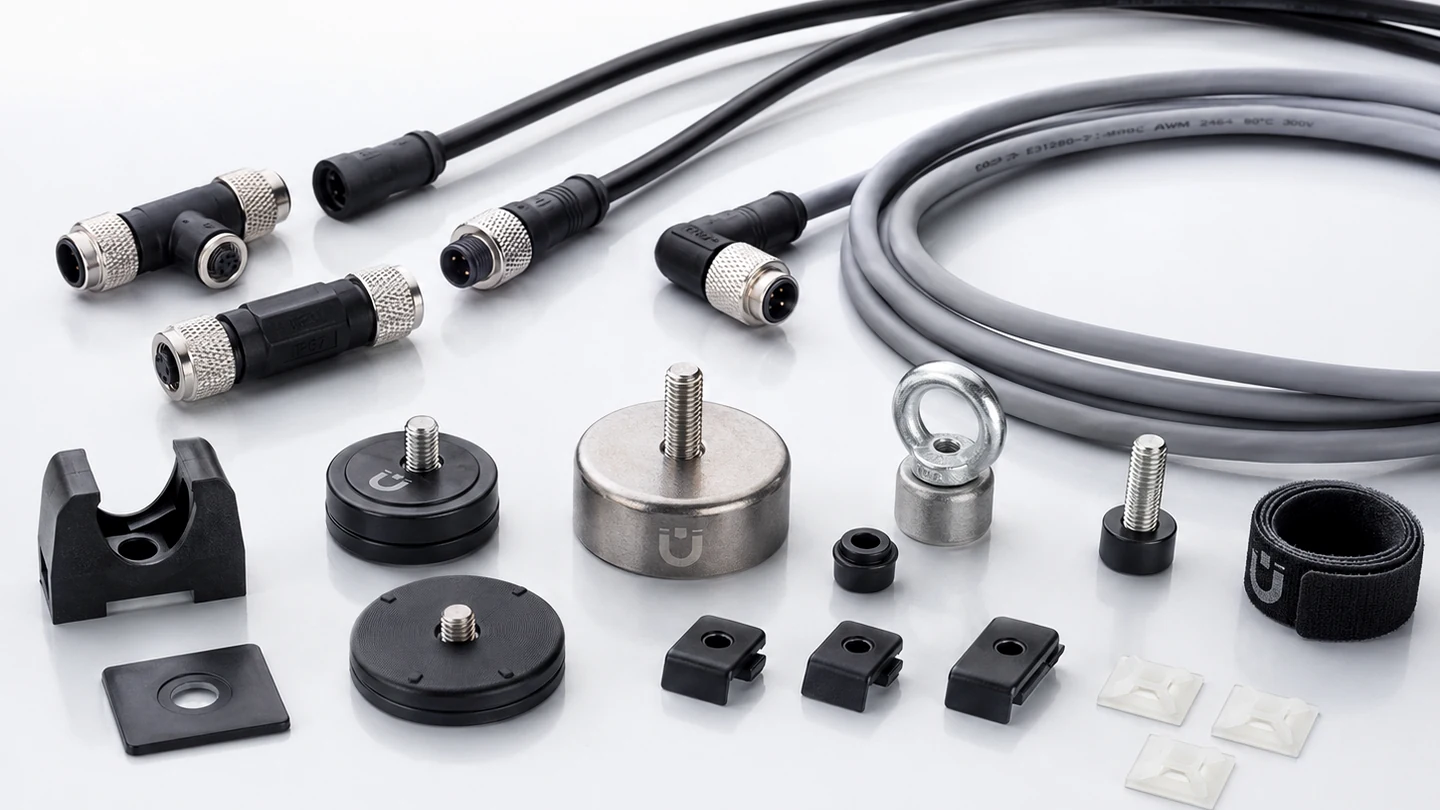
Select a location that provides a rigid vibration path to the bearing or transmission component of interest. Prepare the surface, mount the sensor using the approved stud or magnetic accessory, align the axes and secure the cable.
2. Configure
Set slave address, baud rate, parity, stop bits and response delay. Enter machine profile information such as motor frequency, gear ratio, gear-tooth count and bearing geometry where the firmware uses those values.
3. Baseline
Capture representative healthy operation and verify that RPM, tachometer quality, vibration metrics and temperature are plausible. Record operating load and process state before finalising warning and alarm limits.
4. Integrate and accept
- Map severity, fault status, harmonic and prognostic registers into the supervisory system.
- Test communication-loss handling and stale-data indication.
- Confirm maintenance ownership for warnings and alarms.
- Retain the sensor identity, mounting position, axis orientation, firmware and register-map revision in the asset record.
Technical basis: PyXis Smart 3-Axis Vibration Sensor datasheet TTN-DS-2026-002, issued 19 July 2026. Confirm the current hardware, firmware and controlled document revision before implementation.